A House built on willow, gut string, and good company.
Founded in 1864 by a Yorkshire saddler with a rifle range out the back. Played by W.G. Grace. Praised in Paris. Enjoyed by the World. A British sporting icon, reborn.
§ 01 — THE MAN WHO WATCHED SHOP WINDOWS, 1864
A Yorkshire saddler with an eye for what came next.
George Gibson Bussey was born in Yorkshire in 1829, to a working family. He was apprenticed to a saddler at an early age, before moving to London by 1851. There he established himself as a saddler and gunsmith, a curious pairing that revealed his real talent; an eye for what people were starting to want next.
In burgeoning London, Bussey spent his early mornings walking the fashionable streets, watching as windows were redressed with new wares. He noted what sold, and what drew the admiration of passing clients. By 1855, capitalising on the enduring popularity of shooting he registered as a gun-case maker at 173 High Holborn, the apparent intersection of his two trades.
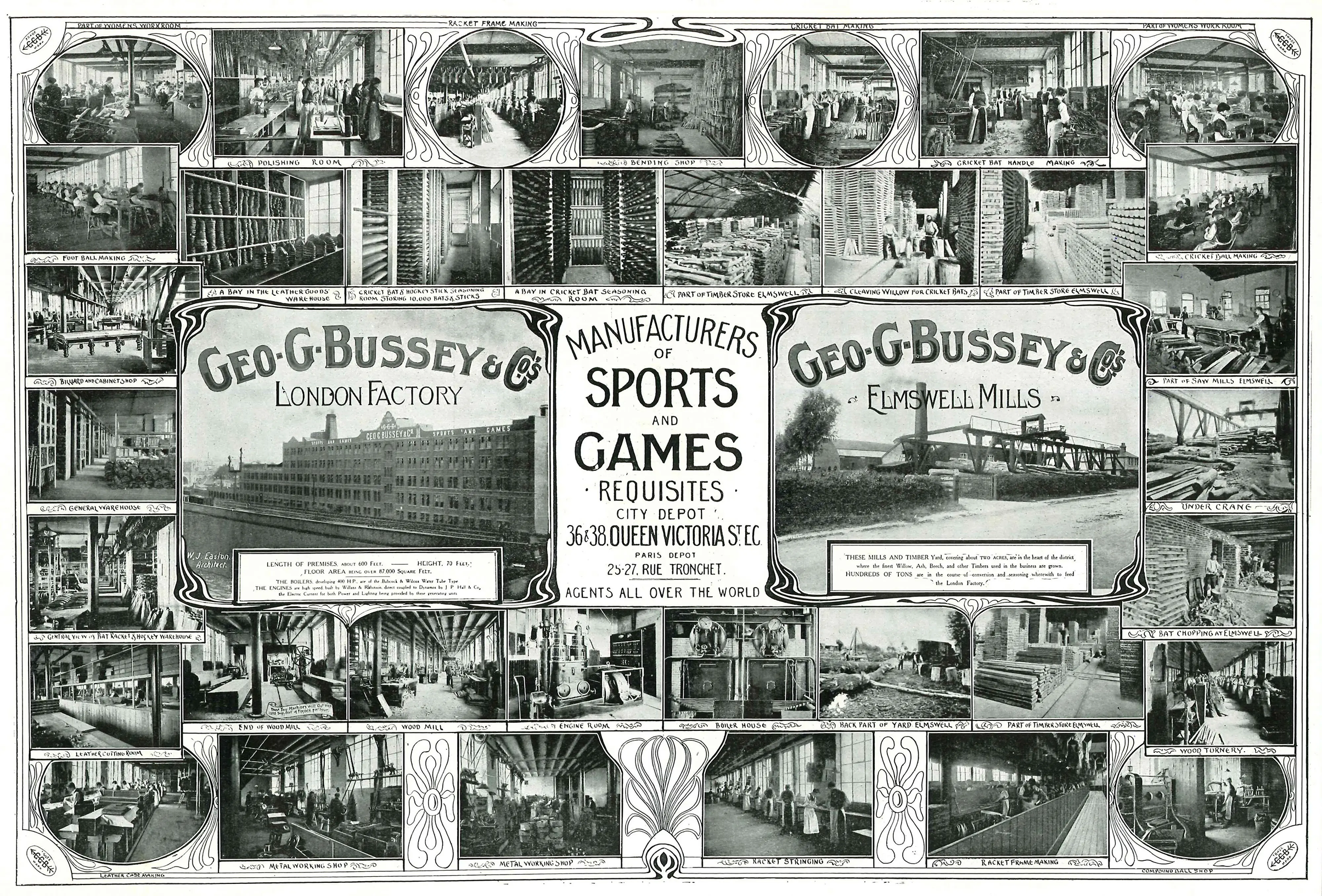
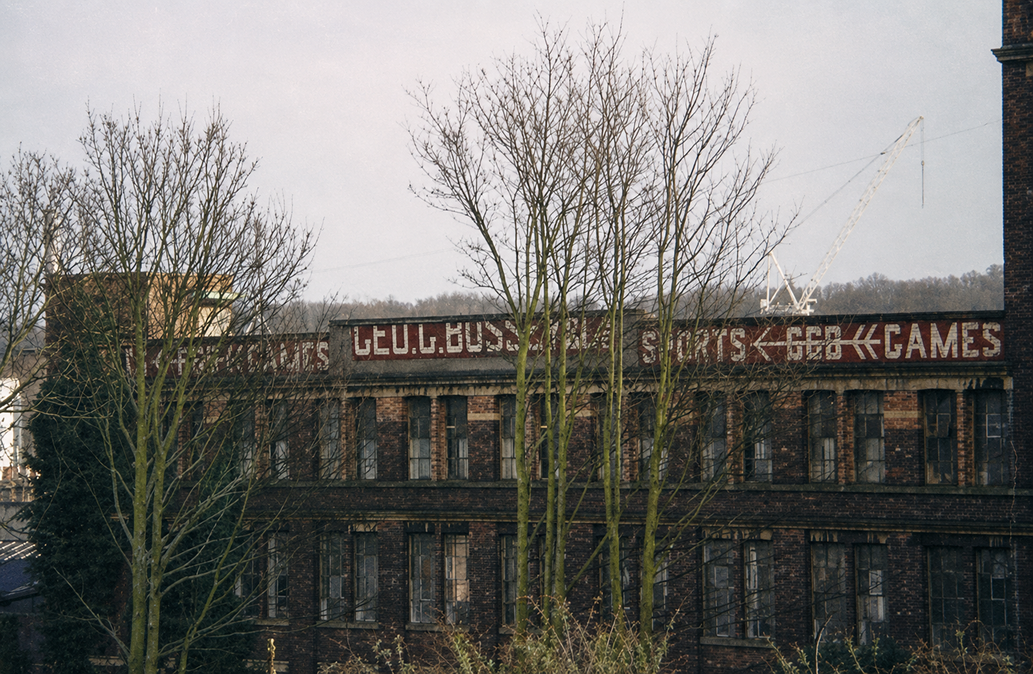
It was not until 1864 that he took the step of opening the Museum Works on Peckham's Rye Lane. The factory housed a museum of his own oddities and a rifle range that ran one hundred yards alongside the railway embankment. He called the firm George G. Bussey & Co. He was thirty-five.
Early mornings strolling through the fashionable shopping districts of London shaped a deep commercial awareness of the nation's emerging sporting passions.
§ 02 — A LETTER TO LYON, 1875
A letter to France, a response in the history books.
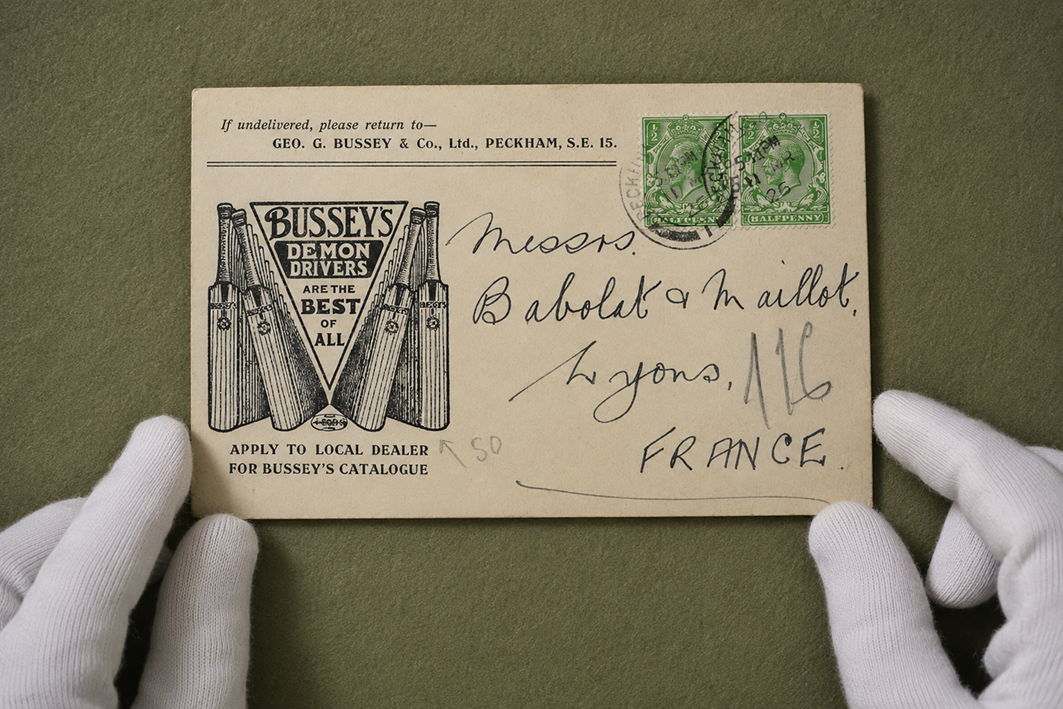
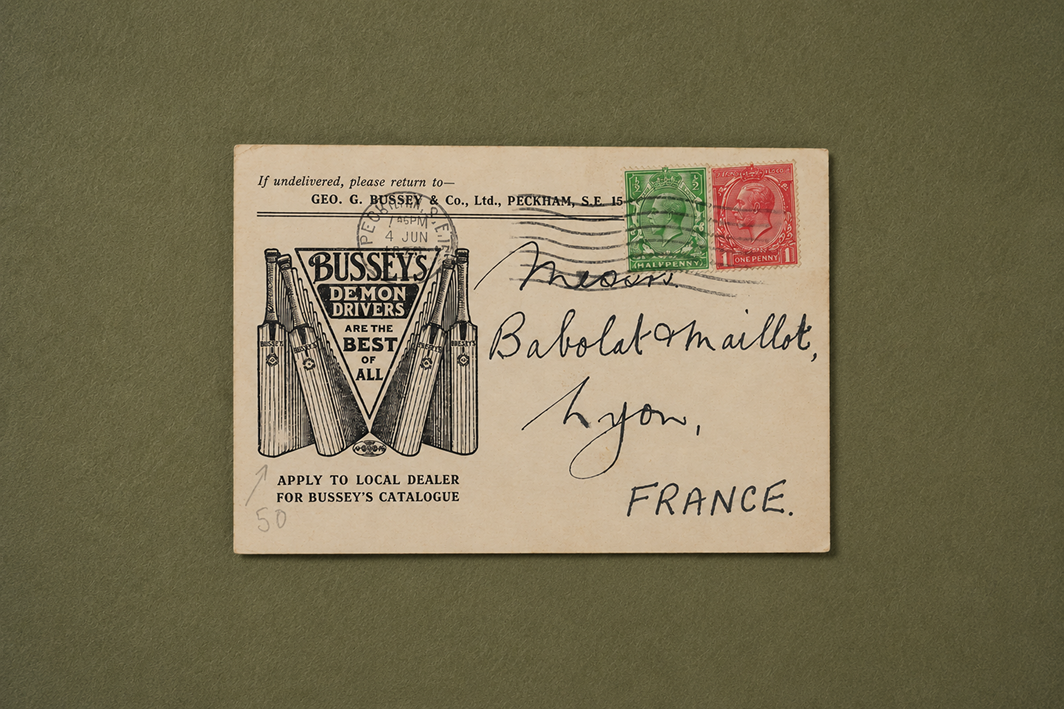
In 1875, a year after the modern lawn tennis racquet was invented, and two before the first Wimbledon Championships, Bussey sat down and wrote a letter. It was addressed to Pierre Babolat in Lyon, a maker of gut strings for musical instruments.
Bussey, who manufactured his own racquet frames, had a hypothesis. The innovations Babolat had brought to violin and harp strings, durability, tension, response, might transform a racquet just as dramatically. Would Monsieur Babolat be willing to string Bussey's racket frames?
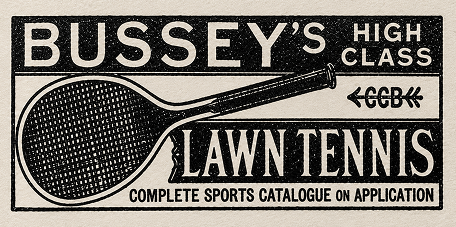
The collaboration that followed produced the first racquets strung specifically for tennis, in time for the inaugural Wimbledon Championships of 1877. It is a partnership the sport quietly inherits to this day.
§ 03 — THE DEMON DRIVER, 1885 ONWARD
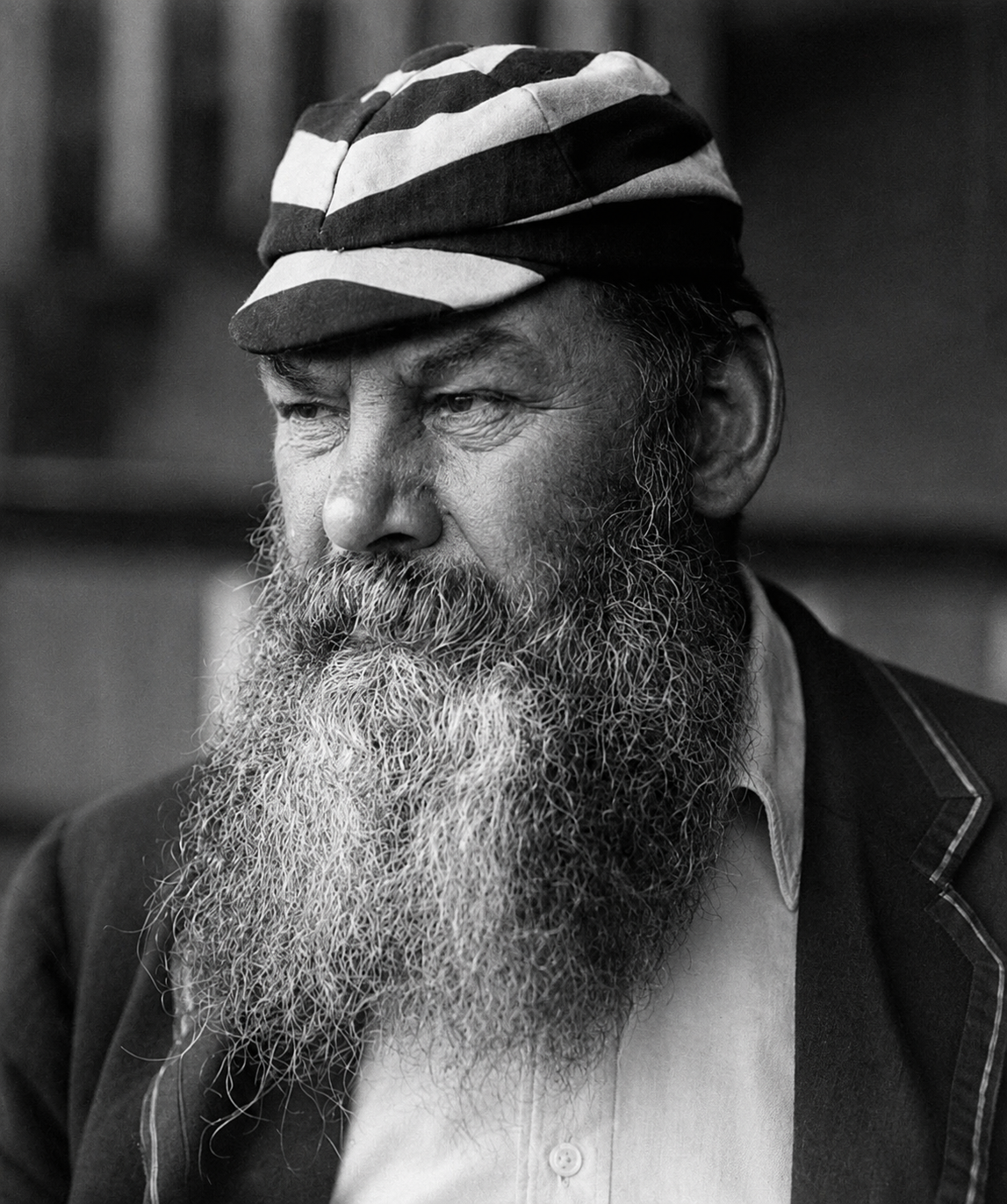
The bat that W.G. Grace played with.
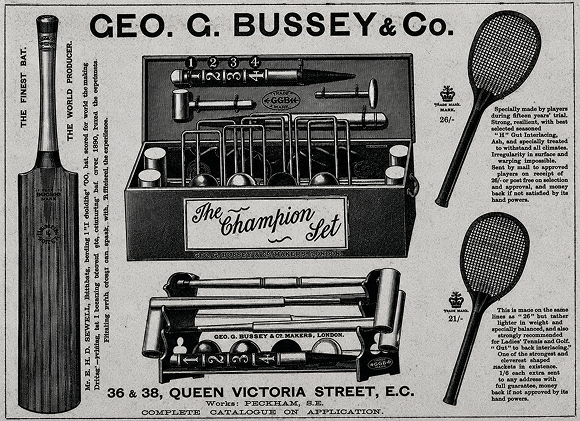
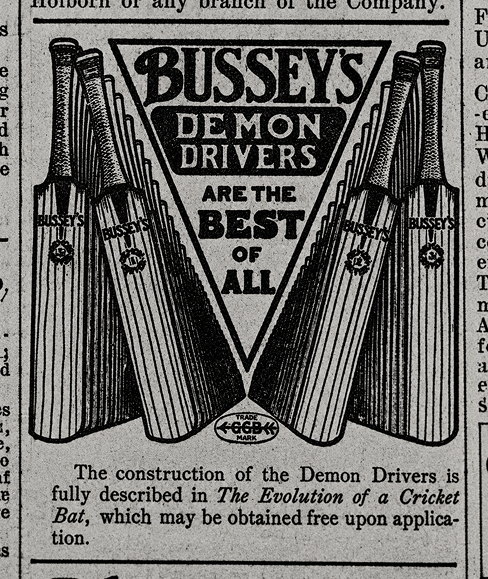
By 1885 the firm had established its name, and an appetite for fine British willow to match. Bussey ran annual public advertisements in regional newspapers each autumn, paying cash for maiden willow and ash trees in the lead-up to the cricketing season. Each bat required twenty-one pounds of willow sapwood.
The bat in question was the Demon Driver. Edward H.D. Sewell wrote of it: "I consider no bat equal to your Demon Driver — which, as I recently scored six centuries, and over 1500 runs in fourteen innings with one, I can speak with sufficient experience." W.G. Grace played with it on multiple occasions.
Today, the Marylebone Cricket Club archive at Lord's still maintains a treatise on the bat's evolution.
I consider no bat equal to your Demon Driver.
— Edward H.D. Sewell, 1898
§ 04 — BROOKFIELD HOUSE, 1887
One hundred and fifty employees. One Yorkshire saddler's house party.
In an age when employee morale was not a common consideration, Bussey hosted an annual luncheon for every one of his staff from the company's founding in 1864. The 1887 lunch, falling in the year of Queen Victoria's Golden Jubilee, and the year the firm was first declared the largest manufacturer of athletic goods in London, was held at the founder's own residence.
Brookfield House, on the Isle of Wight, had once been the summer residence of the Marquess of Exeter. Over one hundred and fifty Bussey staff were invited to attend. Reports describe a pleasant day of games and food on the ornate grounds. The luncheon would later move to Hampton Court.
The making of exceptional products, Bussey believed, was downstream to the making of good a company.
§ 05 — PARIS EXPOSITION UNIVERSELLE, 1900
Paris. Gold. Sport & games.
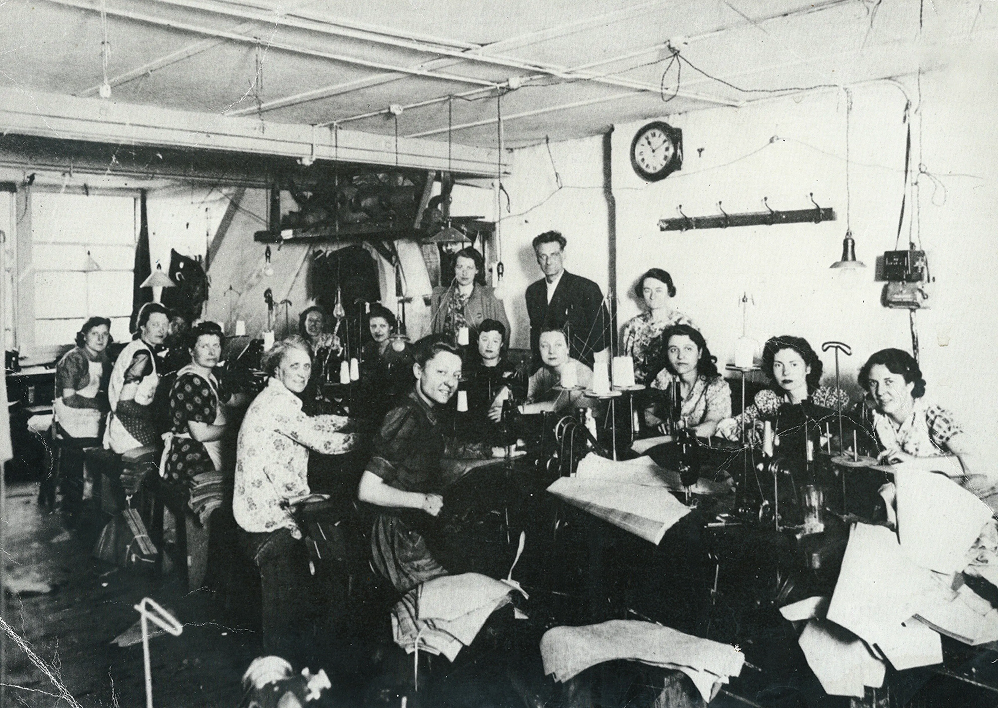
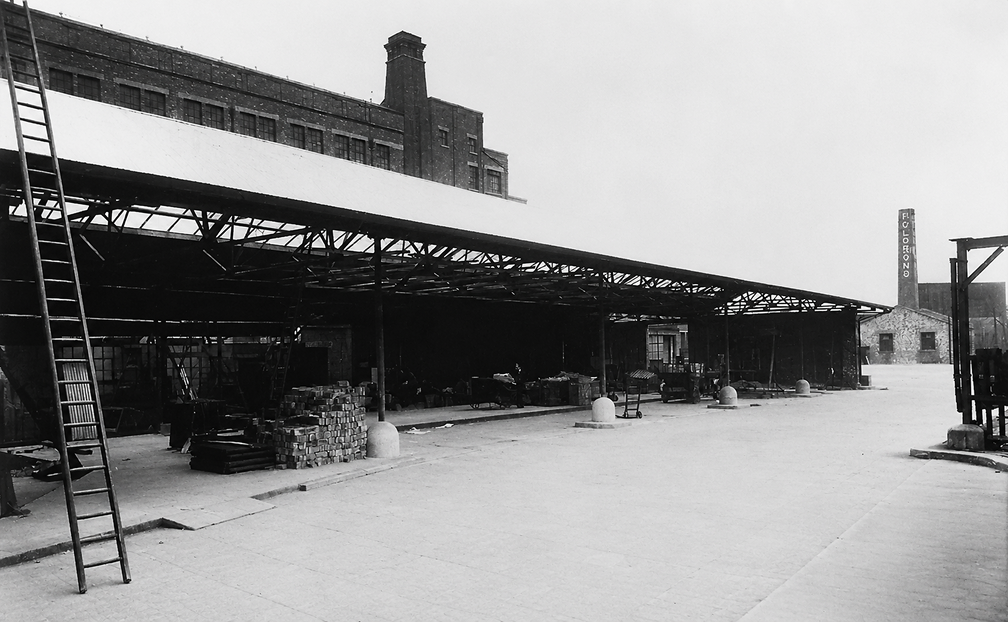
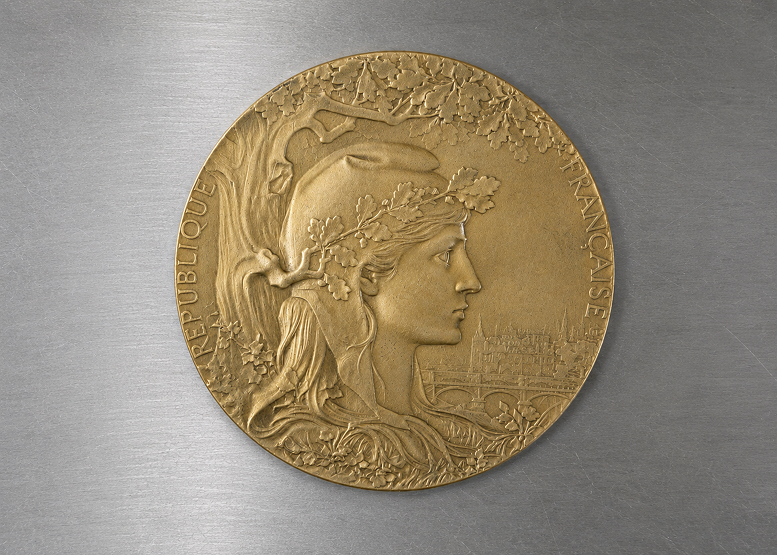
In the summer of 1900, at the Paris Exposition Universelle, G.G. Bussey & Co. was awarded the gold medal for sports and games. By that time the firm owned four properties: the Peckham factory, timber mill in Elmswell, a London store at 36–38 Queen Victoria Street, and a Paris depot at 25–27 Rue Tronchet.
The award was, in some measures, a problem. Demand exceeded production capacity. A campaign was run shortly afterwards explaining that the difficulty in procuring a Demon Driver was due to the firm's refusal to alter its production methods. Quality, the advertisement implied, takes time. It still does.
The business has been built up entirely upon the value of its productions, and practically without advertising. There are few parts of the British Empire where their trademark is not well known.
— Share prospectus, 1906

§ 06 — THE ARROW, 1906
Two thousand trade customers. Every continental capital.
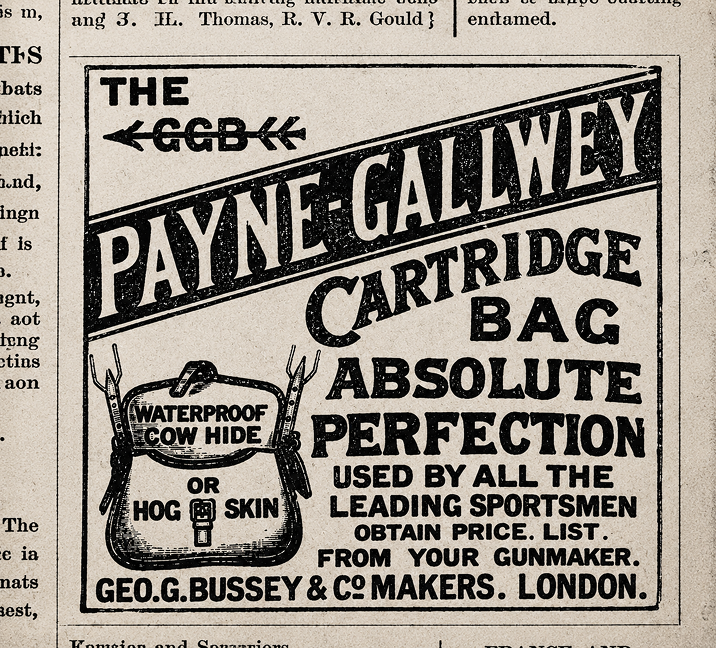
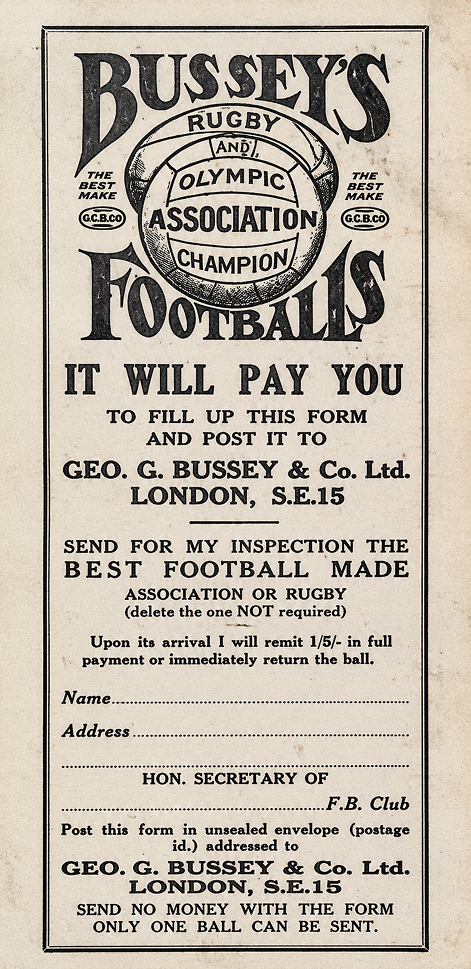
By 1906 the firm's wares were handled by over two thousand trade customers, stocked in every continental capital, with a presence in every meaningful town across Europe and the Americas. The G.G.B. arrow had, in forty-two years, gone from the windows of a Peckham shop to the shelves of meaningful sporting outfitters across the British Empire.
The arrow was not a logo, in the modern sense. It was a guarantee. Goods bearing it had passed through Peckham, or through Elmswell, or under the eye of a craftsman who knew the difference between maiden willow and the rest.
Playing forward, since 1864.